Dispatch No. 21: midwinter spinach = Sformato
Spinach Souffle -> Spinach Sformato | I was a college dropout | My father, prison inmate

With everything going on in our country right now,
and the never-ending horrific news cycle, it can feel insignificant to share recipes for beautiful food or images of a lifestyle that exemplifies comfort, with struggle and adversity a stark reality for so many.
But I push on with the same message again and again:
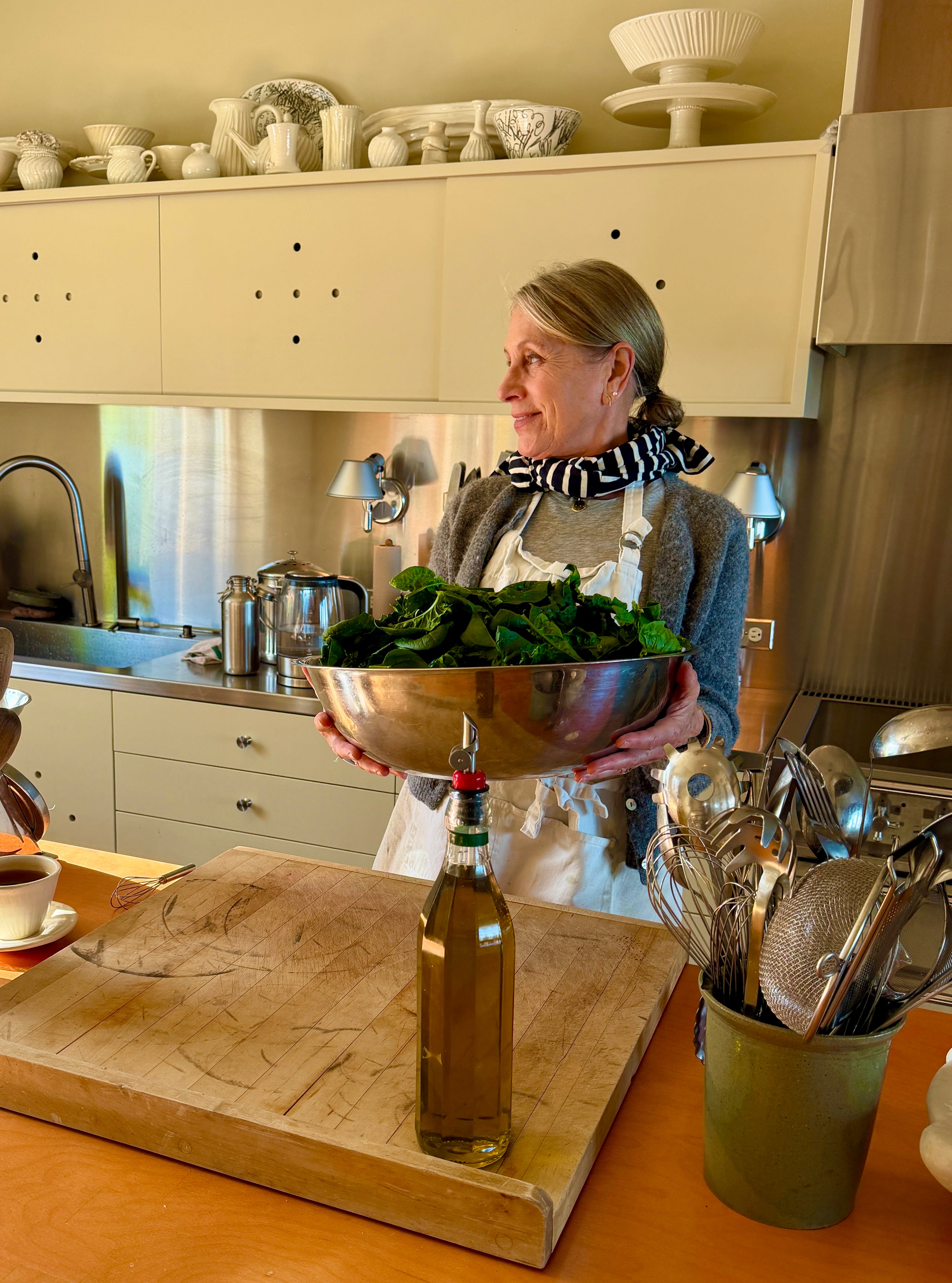
Eat Local Food.
Because choosing to eat local food is a form of resistance. Doing so supports small independent farmers and small businesses, not Big Ag or large corporations. Eating local keeps your dollars in your community. Just as making a phone call to your elected representatives or creating a protest sign is an effective act of resistance, so is eating a bowl of oatmeal from oats grown and milled nearby. Little actions that add up to making a difference.
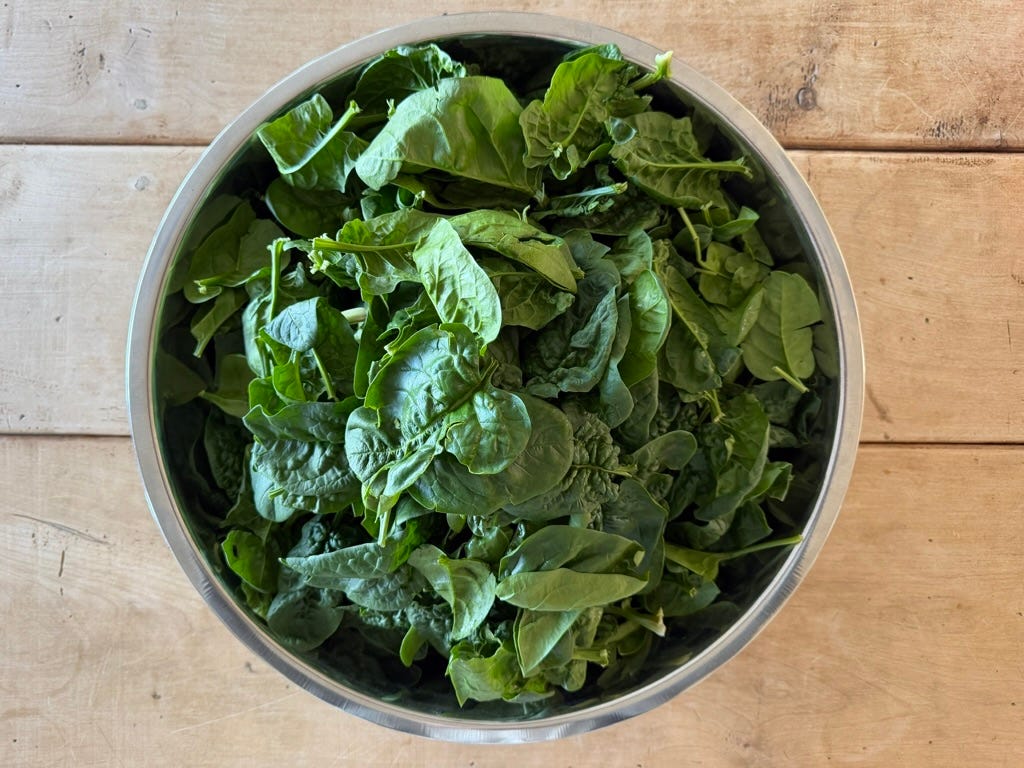
Our locally-grown spinach seems better than ever this season, big stocky dark-green leaves of varieties like Bloomsdale and Olympia,
a thrill to have something so robustly verdant on these coldest January days. I eat it every which way, very quickly sauteed with eggs, stirred into simmering pots of garlicky beans, or as a last-minute addition to braised meats or fluffy grains.
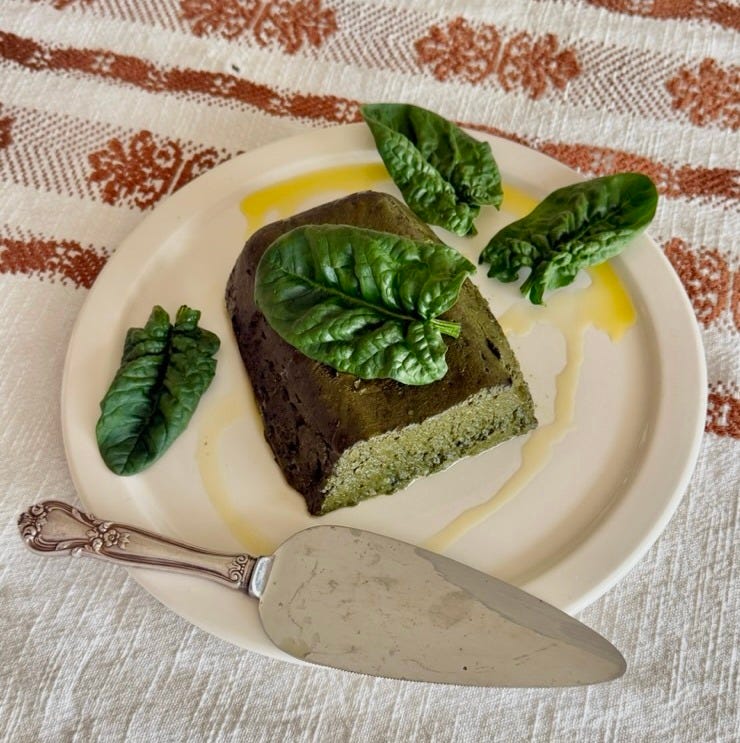
And when I want my spinach to take center stage, as the stuff available right now surely deserves, I make my version of Spinach Sformato, the Italian cousin of Spinach Souffle, only without either the bechamel or the stress of the thing rising or, too often, not ;-). My sformato is rich and dense and moist like a firm savory pudding, deep dark green throughout. It contains eggs, olive oil and two different cheeses, one tangy fresh and soft, the other lightly aged, buttery and deeply flavorful. It feels cleaner and more “modern”, if you will, than souffle.
But don’t get me wrong, I do very much love to EAT spinach souffle, and whenever I encounter it on a menu or read about it or taste it, I am instantly transported, like Proust and his madeleines, to a time when the dish was a vital element in my daily routine.
When my father went to prison,
I had just wrapped up my first year of college at the University of Michigan. I’d been home in Illinois for his sentencing the month before, and on the morning he was ordered to report to Metropolitan Correctional Center, a federal prison in downtown Chicago, my stepmother, youngest stepsister and I drove him, his manual typewriter and a very small suitcase (he wasn’t allowed to bring any of his own clothes except the ones he was wearing) in from our leafy town in the northern suburbs to begin his one-year-and-a-day sentence.